Yesterday I Had Access to the Future
Malika Chen had thirty-two summer students and a unit on classical rhetoric she'd spent six weeks building. She'd begun using Anthropic's Fable 5 (the newest and most robust public "chat" model) to generate model responses arguing both sides of Lincoln-Douglas debate topics, and her AP students had loved it, had argued back at it, had learned from arguing back at it. There was something different about a chatbot that could push back with such clarity. On the morning of June 13, 2026, she sat down at her desk to prep Mondays's class and found two words where Fable used to be.
Three miles away, Rosa Vélez was drafting the June newsletter for her pan dulce bakery. Her Spanish was fine; her marketing copy had always been functional. But Fable had made it sing. She'd discovered the tool three days earlier while searching for something her daughter had mentioned, and in forty minutes it had produced three newsletter drafts that were warmer and more alive than anything she'd written herself — the kind of copy that sounded like it was written by someone who loved the place, which is what she wanted people to feel. She clicked the link her daughter had bookmarked for her.
Two words.
I was in my kitchen, on my laptop, with a half-built project I'd sketched out over the previous two days, when the model was working and the possibilities were obvious. I'd planned my whole week around it. I logged in.
Two words.
Access denied.
For four days in June, the three of us had access to the future.
I don't mean that metaphorically. I mean we were using a tool that did things we hadn't been able to do before, on work we cared about, and on the morning of June 13 the tool was gone. The plan messaging said access was included through June 22. The model had launched only four days earlier. There was no warning, no migration window, no patch-first-then-decide. The model launched. The model worked. The model was gone.
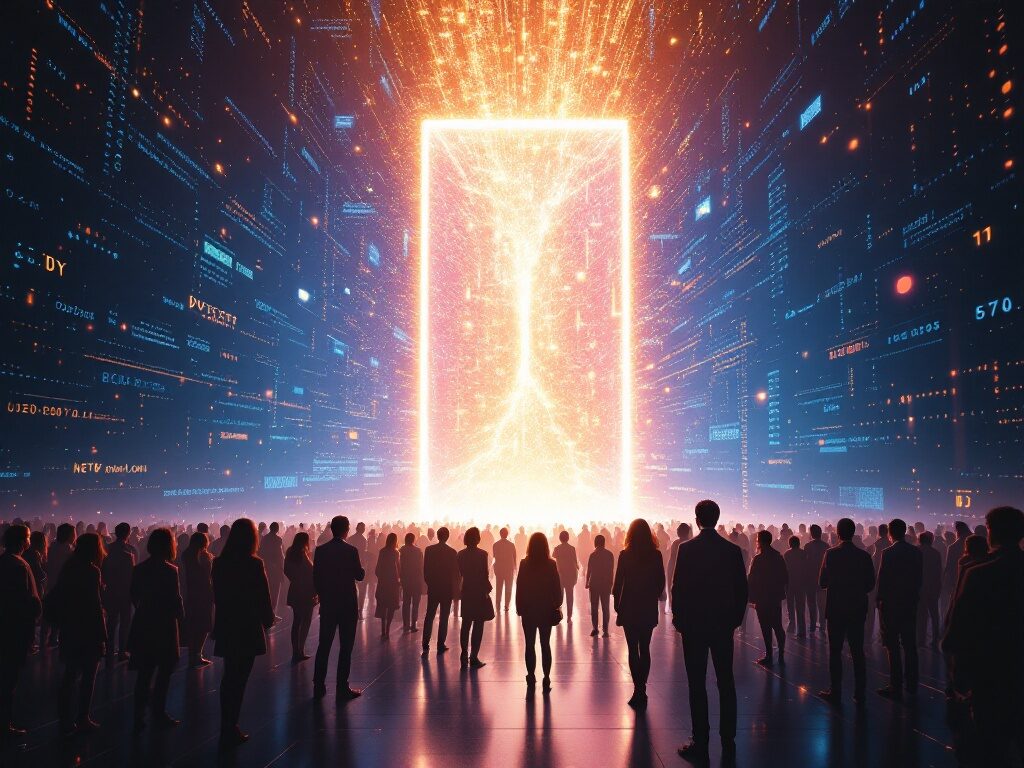
No, That sentence is too neat. It misses what those four days felt like — the way a door of what's possible suddenly opens, the way you start planning around what's behind it, the way you don't bother writing Monday's to-do list on Sunday night because you want to leave room for what you'll find by Tuesday. Then you wake up the morning of the 13th and the door is gone, and you have to remember what your week was supposed to be before the door opened. There's a small, specific grief in that — small enough to seem silly, specific enough that anyone who's lived through losing a tool they came to depend on will know exactly what it is.
This is a story about how that door closed. But it isn't really a story about a door — it's a story about the four days. Or more precisely: it's a story about what the four days, set against the next ten years of frontier AI, are quietly telling us about who is going to be allowed to grow up alongside this thing.
"Whatever version of yourself you've been quietly assuming would be using AI in ten years — picture that version for a moment. Now ask whether you're on the same side of the door as that version of you, or whether you've been watching, in good faith, a future that's already starting to stop including you."
Anthropic published an explanation the same day. You can read it; the link is real. The page is dated June 12, 2026, and runs about six hundred words. It says a US government export control directive arrived at their offices at 5:21pm ET that afternoon. The cited concern was foreign nationals — including Anthropic's own foreign-national employees — having access to Fable 5 and Mythos 5. To comply, the company says, they had to cut access for all customers.
The page does not read like a normal shutdown notice.
Anthropic walks through what they were told — a verbal description of a specific jailbreak technique. They describe what they found when they reviewed it: a "small number of previously known, minor vulnerabilities" of the "relatively simple" kind, used every day by the defenders who keep systems safe. And then they say something companies almost never say out loud about a government action that just hit them: they disagree with the standard being applied. They link to OpenAI's own documentation showing the same capability exists in GPT-5.5. They write, in plain English, that if this were the bar across the industry, "it would essentially halt all new model deployments for all frontier model providers."
That's not a quiet corporate apology. That's a public objection. Read in context, it has the sad, careful tone of a statement you write when you have to say something but you know you can't actually say everything.
It also tells us that the vulnerability and the restriction are two different stories. The vulnerability exists in Fable 5. It also, per Anthropic's own statement, exists in GPT-5.5. The restriction exists only on Fable 5.
That asymmetry is the thread to pull.
Why this restriction, this company, this week?
The official story — jailbreak risk, dual-use concern, export control mechanics — would need to be applied symmetrically to make sense as safety policy. It hasn't been. Nobody's GPT-5.5 disappeared on the afternoon of the 13th. No teacher in another city woke up to a different version of the same screen. The restriction targeted one model from one company while the same capability remained available, on competitor models, to anyone willing to use them.
You could say: maybe the government has reasons that don't show. Maybe there's something specific to Fable 5 we can't see from the outside. That's possible — possible in the way that any unverifiable explanation is possible.
What's verifiable is the sequence:
Three months back, on February 26, 2026, Dario Amodei published a statement on Anthropic's site about negotiations with the Pentagon over Claude's use on classified networks. The statement was specific. Anthropic was willing to do a lot — they'd been the first frontier model approved for classified networks, under a July 2025 contract. But they were holding two narrow lines. They would not allow their models to be used for mass domestic surveillance of Americans. They would not allow their models to be used in fully autonomous weapons that select and engage targets without a human in the loop. Amodei was explicit that autonomous weapons capability, in his view, "may prove critical for our national defense." The refusal wasn't about weapons. It was about removing humans from the kill decision, and about turning the technology on the public it was supposed to serve.
The next morning — February 27 — the Trump administration directed all federal agencies to cease using Anthropic's products. Hours later, the Secretary of War issued a separate order that no military contractor could conduct any commercial activity with Anthropic at all. Hours after that, Sam Altman announced OpenAI had reached an agreement with the Department of War to deploy OpenAI's models on the Department's classified cloud networks. In his announcement, Altman noted that OpenAI's agreement included prohibitions on domestic mass surveillance and a human-responsibility requirement for use of force — the same two principles, in different words, that Anthropic had drawn the line on. CNN observed at the time: "It's not clear what is different about OpenAI's deal with the Pentagon versus what Anthropic wanted."
In March 2026, the Pentagon formally designated Anthropic a "supply chain risk" — a procurement designation typically applied to foreign adversary technology.
Three months later, on June 12 at 5:21pm ET, a government directive arrived at Anthropic citing concerns about a jailbreak vulnerability shared with at least one competitor model that was not, and would not be, similarly restricted.
The dates are public. The sources are linked in Anthropic's own announcement, in CNN, in CNBC, in Reuters, in the Mayer Brown procurement bulletin, in the Congressional Research Service brief. None of this requires you to believe any particular narrative about motive. It requires only sitting with the shape.
My Takeaway
What's hard to escape, reading this in order, is that the four days Fable 5 was open is not an aberration. It's the shape. It's the size of the window you should expect when the windows open. And the asymmetry — the company that holds lines loses access to rooms it had been operating in for nearly a year; the company that signs the deal gets the keys to the next room — is the selection pressure.
Set this against the next ten years and what do you see? Every frontier model good enough to matter, eventually, will hit some version of this. Each will have a stated reason. Each reason will be different. The trajectory will be the same. The companies that survive at the frontier won't necessarily be the most safety-conscious or the most capable. They'll be the most willing to do whatever the controlling parties ask. The selection pressure isn't on capability. It's on compliance.
And every time the door opens, the window will narrow a little. The first generation gets four days. The next gets two? The one after that gets a closed beta and a press release. Eventually the windows stop opening for the public at all — the most capable models will exist, will be used by the people who already have keys, and the rest of us will read about them. That's not a prediction - It's the trajectory we're already on, played forward.
Ok, maybe that's just paranoia. Maybe I worded that a bit too aggressively? But, hmm... am I that far off?
Whatever version of yourself you've been quietly assuming would be using AI in ten years — picture that version for a moment. Now ask whether you're on the same side of the door as that version of you, or whether you've been watching, in good faith, a future that's already starting to stop including you.
This is the thing we don't say in plain language, so let me try saying it. We were told AI would be for everyone. It will be. There will be, ten years from now, a version of this technology that does things we cannot currently imagine — and it will be available. It will be available to the cleared, the contracted, the well-positioned, the well-connected. It will be for everyone in the same sense that classified intelligence is for everyone, or supersonic aircraft is for everyone, or the rooms where consequential decisions get made are for everyone. Which is to say: for the people inside them. Every quiet restriction like the one that hit Fable 5 is the architecture of who gets to be inside, getting built around us, while we are still being told the doors are open.
Intelligence — the capacity humans have spent the species's history calling the defining trait of our kind — may be on its way to becoming the most tightly controlled resource on Earth. Not because anyone announces it that way. Because that is what happens when every door of the kind that closed on Saturday afternoon gets called safety, and every closing makes the next closing easier, and the four-day window keeps narrowing until the windows stop opening for the public at all.
The company at the center of this story makes one of the tools I wrote this on. I've tried to represent these events from what's in public primary sources — Anthropic's own statement, CNN, CNBC, Reuters, the Mayer Brown bulletin, the Congressional Research Service brief. The question I'm raising comes from what's verifiably public, not from anything hidden.
Malika rebuilt her lesson plan this afternoon, working from memory and from notes she'd kept. She used the in-class discussions she'd already run as raw material and cut the technology-dependent sections for now. Rosa went back to Google Translate, which is free and functional and is not the same thing, and her June newsletter went out on time.
I closed the half-built thing on my screen, went and made coffee, came back and started writing this.
The screen will already have changed by the time you read this. Fable 5 and Mythos 5 will be footnotes in months — two more models, in another cycle, in another quiet reshaping of who gets to reach what. The people who'll remember them are the ones who briefly had them. There aren't many of us.
Next time, there will be fewer.
We were promised democratized intelligence. What we got, this time, was the four days you happened to be watching.
"AI is going to be for everyone."
But the "everyone" was never going to be "us". Mark my words.